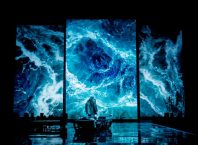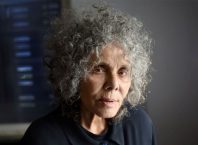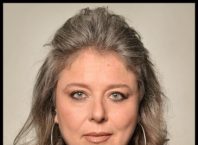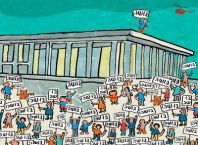
The Metula Poetry Festival will once again take place in Jerusalem, from August 25 to 27, 2026, with the hope of peaceful days and of returning to its home in the Galilee. The festival was founded in Metula twenty-nine years ago, but since 2024 it has been temporarily moved to Jerusalem due to the damage caused to the beloved northern town during the war. Metula is currently marking the 130th anniversary of its establishment. Produced and curated by Confederation House in Jerusalem under the direction of Effie Benaya, the festival has become one of Israel’s leading literary events. The festival’s artistic directors are Benny Ziffer and Shiri Lev-Ari. Entrance to festival events (with the exception of the opening performance) is free of charge, on a space-available basis, with the exception of the opening and closing events at Mishkenot Sha’ananim. The full festival program is available below in the press release.
Metula Poetry Festival
The festival’s title is taken from Amir Gilboa’s celebrated line: “Suddenly a man rises in the morning and feels he is a people, and begins to walk.” The line serves as a thread connecting the festival’s events, which will explore memory, society, language, and hope. The program ranges from tributes to key figures in Hebrew culture and encounters between established and emerging voices to discussions of urgent contemporary questions such as war, identity, and artificial intelligence.
Effie Benaya, CEO of Confederation House and Director of the Festival, said:
“I regard our success in holding Israel’s most important poetry festival again this year as a special achievement. The large audience that comes to Jerusalem for the festival demonstrates its love of poetry and its desire to express solidarity and mutual responsibility. I hope that next year we will return to a thriving and flourishing Metula.”
Over three days, the festival will bring together leading Israeli poets, writers, creators, and literary scholars for conversations, readings, performances, and tributes to figures who have shaped Hebrew culture.
Benny Ziffer and Shiri Lev-Ari, the festival’s artistic directors, said: “This year, once again, the festival seeks to demonstrate that poetry is far more than literature. It is a place of encounter, listening, and hope—until the day the festival returns to its natural home in Metula.”
Participants include Haim Be’er, Yishai Sarid, Dror Burstein, Agi Mishol, Erez Biton, Aharon Shabtai, Roni Someck, Dan Miron, Ariel Hirschfeld, Ruth Kartun-Blum, Sami Shalom Chetrit, and Eyal Megged, alongside a younger generation of poets including Yali Shenar, Adam Ratzon, Lee Maman, Eran Tzelgov, Gilad Kahana, and many others.
Festival Highlights
The opening evening, like the festival as a whole, will be dedicated to poet Amir Gilboa and his legacy. Writers, poets, and poetry scholars will explore the core of Gilboa’s world and discuss his life and work.
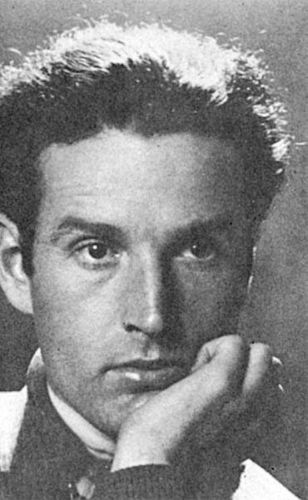
The closing event will celebrate the 120th anniversary of poet Alexander Penn’s birth, with Hagit Halperin, Agi Mishol, Rita Kogan, and Tzur Ehrlich. Cultural figure, journalist, and television personality Yaron London will conclude the festival with a topical rhymed poem he wrote to Camille Saint-Saëns’s musical work The Carnival of the Animals. Pianists Eran Sulkin and Amit Gega will perform selections from the witty and dazzlingly virtuosic work at one piano, four hands.
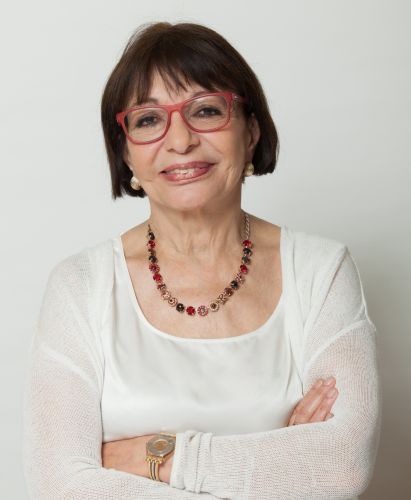
Rivka Michaeli, the grande dame of Israeli entertainment, will join the festival for two major events. In a tribute to playwright and revolutionary of the Hebrew language Nissim Aloni, she will share memories of working with him and perform several roles she played in his works. In a more solemn setting, she will read excerpts from Nathan Wasserman’s new Hebrew translation of the Mesopotamian Epic of Gilgamesh.
Special tributes will be devoted to Erez Biton, Nava Semel, Yoram Kaniuk, Israel Eliraz, O. Hillel, Agi Mishol, Aharon Shabtai, Dan Pagis, Yotam Reuveni, Nissim Aloni, and Uriel Ofek—the father of Israeli children’s literature—on the centenary of his birth.
A special event will honor the Metula Poetry Festival and the communities of northern Israel, addressing memory of place, war, and poetry’s power to connect people.
There will be encounters with writers Haim Be’er and Eyal Megged on the occasion of their new books, while Yishai Sarid will discuss his new novel and his father, Yossi Sarid.
Additional panels will examine poetry’s role during wartime, right-wing poetry in Israel, political poetry, Israeli identity, Arabic poetry in Israel, literary translation, literature’s place in Israeli society, and secular and religious poetry.
A special festival session will explore the meeting point between artificial intelligence and literary creation.
All events will include music and performances by leading artists, among them Israel Bright, Hadara Levin Areddy, Victoria Hanna, Adi Porti, Yossi Fine, Yair Dalal, Itay Ben-Nun, Joe Taylor, and others.
Festival Program
“Suddenly a man rises in the morning and feels he is a people, and begins to walk”
Tuesday, August 25
14:30–15:30 | Mishkenot Sha’ananim Auditorium
Poetry of the Unwalled Cities: A Tribute to Erez Biton
Erez Biton’s receipt of the Israel Prize for Poetry in 2015 suddenly cast a bright light on the world of a poet who grew up in the neglected “unwalled city” of Lod, a place he has never ceased to write and sing about. In his most recent book, Biton returned to bring to life the anonymous figures buried in Lod’s cemeteries. Biton will read from his poetry and speak with Tzipi Shaharur, a veteran poet born in Ramla and the author of forty books of poetry, prose, and literature for children and young adults. Her novel Calypso Ramla is a love song to Ramla’s music clubs of the 1960s. The two will discuss the landscapes that shaped them, center and periphery, and poetry as a beam of light in the darkness. They will be joined by poet Shlomi Hatuka, an heir to Biton’s poetic path, whose latest book, A Merit Point for Singles, develops a poetics of place and turns the periphery into the center.
Music: Israel Bright, YABA
Moderator: Amos Noy
14:30–15:30 | Confederation House
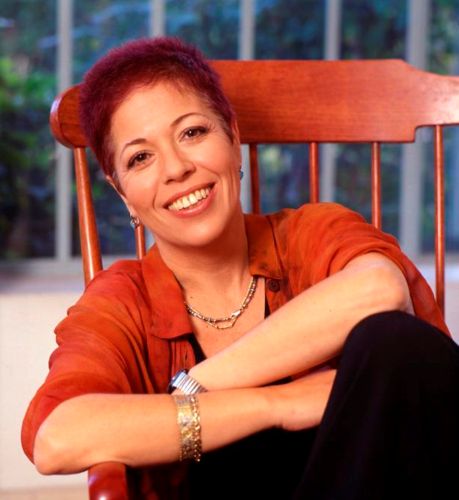
Lilith Demands Equal Rights for Women and Esau Goes to Couples Therapy: Nava Semel’s Psalm to the Bible
Nearly ten years have passed since Nava Semel left us too soon. Behind her international success as a prolific novelist and playwright, poetry was always present; after her death, her poems were collected in the volume A Woman’s Life Cycle. Another work demonstrating the breadth of her creativity was Psalm to the Bible, published several years before her death—a witty yet incisive collection of poems about biblical heroes and heroines and their destinies. Semel’s niece, artist Shiri Artzi, and her husband, Noam Semel, will speak about her and read from her work. Semel’s son, musician Iyar Semel, will read two poems she wrote. Her family will discuss her life and work with poets Roni Someck, Yohai Sufar, and Avigail Antman.
Music: Micha Biton
Moderator: Shiri Artzi
14:30–15:30 | Gallery, Confederation House
The Man Who Loved to Make Up Stories: In Memory of Yoram Kaniuk
Yoram Kaniuk, a writer of Israel’s 1948 generation, played hide-and-seek with reality throughout his life. The author who gave us Himmo, King of Jerusalem, The Wooden Horse, and The Last Jew did everything possible to confuse his biographers. Nevertheless, scholar Adia Mendelson-Maoz succeeded in publishing Yoram Kaniuk: Instead of a Biography. She will discuss her research and the novel Soap, which she discovered among Kaniuk’s papers after his death, in conversation with Prof. Hagit Halperin and writer Yair Assulin, whose work continues Kaniuk’s antiwar spirit.
Music: Hadara Levin Areddy
Moderator: Ofra Ofer Oren
16:00–17:00 | Mishkenot Sha’ananim Auditorium
Drops of Happiness in a Crumbling World: Roni Someck and Friends
Several years ago, festival audiences chose Roni Someck as the national poet of our time. Someck declined the honorary crown and preferred to be called “the beloved poet.” Over the years, it has become clear that he created a kind of poetic school of writers who refuse to surrender to melancholy and instead search for rare moments of happiness, delighting in family life and the simple things. One of Someck’s spiritual descendants—and also his nephew—is poet Yakir Ben-Moshe, who developed a distinctive voice that has grown richer from his first collection, Every Morning at Least One Blond Man Goes Bald, to his latest, Stretching the Arteries of Morning. Another is poet and radio personality Alfred Cohen, the author of three collections of poems that seek reconciliation with the world. Someck will read from Stamp in the Passport of the Body, Ben-Moshe from Stretching the Arteries of Morning, and Cohen from Indipopo Nonstop. The three will discuss what unites and distinguishes them, and the ground from which they grew as poets.
Music: Victoria Hanna, Liora King-Pitts
Moderator: Alfred Cohen
16:00–17:00 | Confederation House
“And the Panthers? What Are They Singing?”: An Encounter with Sami Shalom Chetrit
Fifty-five years ago, the Israeli Black Panthers movement emerged in Jerusalem’s Musrara neighborhood, provoking an automatic antagonism epitomized by Golda Meir’s famous statement: “They are not nice.” Some thirty years after that protest movement faded, poet Sami Shalom Chetrit created the film The Black Panthers Speak. Now, a full generation later, he has written a poem—an elegy of sorts—for a lost dream that became a dead letter. Chetrit will read the poem “And the Panthers? What Are They Singing?” and other works, and discuss his life and writing with poets Roy Hassan and Gilad Meiri, whose poetry carries the wounds of discrimination and the suffering of previous generations.
Music: Yossi Fine, Yair Dalal
Moderator: Ofra Ofer Oren
16:00–17:00 | Gallery, Confederation House
“In Wartime One Must Write a Love Poem”: On the Role of Poetry Today
Leah Goldberg famously—and controversially—argued after the outbreak of World War II that precisely in times of horror, poems should be written about nature, trees, and flowers. What about today? Three poets whose work addresses women’s everyday lives will consider what is expected of poetry now. Lee Maman, whose book Ventriloquism revolves around parenthood and created a new language for the current generation of mothers, will speak with Bekhol Serloui, a religious and feminist poet who has also written philosophical essays on Judaism in Excess Weight: The Body, Religion, and the Present, and with poet Nili Dagan, who runs a leading poetry website and continues her dialogue with the living and the dead in her latest collection, That Is Where I Am Going.
Music: Hadara Levin Areddy
Moderator: Avigail Antman
17:30–18:30 | Mishkenot Sha’ananim Auditorium
A Prophet in His Own City: An Encounter with Yishai Sarid
In recent years, writer Yishai Sarid has taken his place at the heart of the contemporary Israeli literary canon. His books address the burning issues and internal struggles tearing Israeli society apart. His new novel, Hanoch the Physician of Chorazin, tells of a figure from the Second Temple period—a moderate, rational doctor in the town of Chorazin who confronts religious and messianic forces around him. Sarid will discuss his attraction to the Second Temple era, the impulse to tell stories that reflect present-day reality, and his longing for his father, left-wing leader Yossi Sarid. Adiva Geffen, director of the Gnazim Archive, will speak with Sarid about his father, who left behind a rich body of prose and poetry, and present treasures preserved in his literary estate. They will be joined by Dorit Sarid, Yossi Sarid’s widow, who will speak about his social work and writing.
Music: Israel Bright
Moderator: Shiri Lev-Ari
17:30–18:30 | Confederation House
From Robinson to Lobengula: The Centenary of Uriel Ofek
Uriel Ofek was a walking encyclopedia of children’s literature and its ultimate historian. His books and translations accompanied generations through childhood and adolescence, from Alice in Wonderland to Yehoshua Parua. The centenary of his birth offers an opportunity to revisit the golden age of Hebrew children’s newspapers such as Ha’aretz Shelanu and Davar LaYeladim, and to renew the discussion of the place of children’s and young-adult literature today. Participants include poet Sabina Messeg, who writes for children under the pen name “Adula”; poets Yakir Ben-Moshe and Gilad Meiri; and Ofek’s daughter, editor and translator Atara Ofek.
Music: Victoria Hanna, Liora King-Pitts
Moderator: Atara Ofek
17:30–18:30 | Gallery, Confederation House
“Before the Yes and No of the World”: Remembering Poet Israel Eliraz
This year marks ninety years since Israel Eliraz’s birth and ten years since his death. A refined poet who belonged to no group, he was a school unto himself. His contemplative, philosophical poetry fell silent with his death, and it took time to feel the absence of his quiet, measured, almost un-Israeli voice. He left behind devoted admirers among poets, who will discuss him and read from his work. Writer Tamar Mor Sela, author of A Conversation with Israel Eliraz, will speak with poet Agi Mishol. Eliraz’s son, Moshe, will share memories of his father and discuss a complete play discovered in his literary estate.
Music: Itay Ben-Nun, Joe Taylor
Moderator: Tamar Mor Sela
19:00–20:00 | Mishkenot Sha’ananim Auditorium
If I Forget You, Metula: Metula as a Crossroads of Poetry
In the twenty-ninth year of the Metula Poetry Festival, the festival will continue to be hosted in Jerusalem because of the security situation in northern Israel. Yet sorrow will be mixed with joy at our determination to hold the festival no matter what. As a tribute of longing to the northern town, the event will present recordings of Dalia Ravikovitch, Aharon Amir, and Uri Bernstein from the Metula Radio programs of 1996, edited by the late Ilana Zuckerman. Poet Elad Zeret will read a cycle of poems written especially about Metula and discuss it with poets Agi Mishol, Sabina Messeg, Roni Someck, and Miron C. Izakson, all veteran festival participants. Poet and former security official Eliezer “Gezer” Hillel, whose life is closely connected to the Upper Galilee—Beit Hillel, Metula, and Yesod HaMa’ala—will read recent poems about the war in the north. Together with Uri Hollander, a former artistic director of the festival, the participants will share memories and read poems born in Metula and inspired by it. David Azoulay, head of the Metula Local Council, will deliver remarks.
Music: Hadara Levin Areddy, Yair Dalal
Moderator: Miron C. Izakson
19:00–20:00 | Confederation House
There Is Religious Poetry in Hebrew. Is There Secular Poetry Too? A Panel Discussion
A century ago, Kabbalah scholar Gershom Scholem argued that the Hebrew language is intrinsically religious and messianic. For a hundred years, poets have tried to shake off that fate. Where do we stand today? Participants in this discussion include law professor Nili Cohen, author of Laws and Words, and poets Ruth Feuerstein, Adam Ratzon, Bekhol Serloui, and Yair Assulin.
Music: Itay Ben-Nun, Joe Taylor
Moderator: Benny Ziffer
19:00–20:00 | Gallery, Confederation House
A Translator’s Life’s Work: An Encounter with Avraham Oz
This past year saw the publication of The Power of Beauty, a monumental volume of more than 500 pages in which translator Avraham Oz assembled the finest of his poetry translations. The selections speak to every reader of poetry, ranging from poems against war and evil, exile and loss, to love and longing. Best known for his dramatic translations and his work as a director and theater scholar, Oz emerges in this collection as an inspired poet and lyricist in his own right. He will read from his translations and speak with leading figures who continue this path: poet and translator Rita Kogan, poet and translator Lior Sternberg, and poet and translator Ofra Ofer Oren.
Music: Israel Bright
Moderator: Rafi Weichert
20:30–22:00 | Mishkenot Sha’ananim Auditorium
Opening Event
“Suddenly a man rises in the morning and feels he is a people, and begins to walk”: A Memorial Tribute to Poet Amir Gilboa
The music world has the term “one-hit wonder.” If the category were applied to poetry, Amir Gilboa would undoubtedly qualify. Gilboa (1917–1984) was a contemporary of Yehuda Amichai, but far more reserved and less visible. He wrote dozens of poems collected in volumes beginning in the 1940s, yet above them all shines the crown jewel: “Song in the Morning, in the Morning,” set to music by Gidi Koren and performed by Shlomo Artzi, which became a hit whose charm has endured to this day. Who was Amir Gilboa? What is his importance as a poet? On what foundations does his poetry rest? Writers, poets, and scholars who have engaged deeply with Gilboa’s world will discuss his life and work: Prof. Ariel Hirschfeld; Israel Prize laureate in law Prof. Nili Cohen; Israel Prize-winning poet Erez Biton; literary scholar Bilha Ben-Eliyahu; poets Agi Mishol, Roni Someck, Sabina Messeg, and Lee Maman; and rabbi and poet Elhanan Nir.
Music: Israel Bright, Victoria Hanna, Liora King-Pitts, Yossi Fine, Hadara Levin Areddy
Moderators: Shiri Lev-Ari, Benny Ziffer
Wednesday, August 26
14:30–15:30 | Mishkenot Sha’ananim Auditorium
“Apparently I Was an Important Man! Ho-Ho!”: Remembering O. Hillel
This year marks the centenary of poet O. Hillel, whose poetry for children formed part of the soundtrack of childhood for generations of Israelis, with beloved poems such as “Why Does the Zebra Wear Pajamas?” and “What Do the Trees Do?” Yet O. Hillel was also an innovative poet for adults, the author of breathtaking poems about the landscape of Israel gathered in his major volume Land of Noon, including “At the Kfar Saba Turn” and “Earth Poem,” whose expansive style recalls the American poetry of Walt Whitman. Literary scholar Prof. Hagit Halperin has written about O. Hillel’s relations with the poets of his generation, from Avraham Shlonsky to Haim Gouri. She will discuss the subject with Adiva Geffen, director of the Gnazim Archive, and poet Tzur Ehrlich.
Music: Victoria Hanna, Liora King-Pitts
Moderator: Sabina Messeg
14:30–15:30 | Confederation House
Do You Know the Land Where Cannons Bloom? Political Poetry Then and Now
“When leaders speak of peace, the common people know that war is coming,” wrote Bertolt Brecht, whose seventieth death anniversary falls this year. The playwright and poet remains a model and source of inspiration for generations of political artists. His relevance and urgency reemerge in every era of war, injustice, and existential despair. Two of his translators, Avraham Oz and Elad Zeret, will read his poems in their own translations and speak with poetry scholar Prof. Ariel Hirschfeld about Brecht’s profound influence on Hebrew culture. They will be joined by television journalist and Germanist David Witztum, an expert on Erich Kästner—the beloved children’s author who also wrote political protest poetry.
Music: Israel Bright
Moderator: Shiri Lev-Ari
14:30–15:30 | Gallery, Confederation House
Here Lies the Poet: Journeys to the Graves of Poets
Karen Alkalay-Gut, an Israeli poet who writes in English, Yiddish, and Hebrew, traveled around the world in search of the graves of great poets. She returned with fascinating stories and insights into memory and forgetting after death. She will discuss her book Here Lies the Poet and describe, among other discoveries, finding Allen Ginsberg’s grave near a garbage dump on the edge of Newark Airport in New Jersey. She will be joined by poet Hamutal Bar-Yosef, whose book Epitaphs is devoted to imaginary inscriptions for herself and others, and literary scholar Yehoshava Samet-Shinberg, who will describe her research journeys in pursuit of the gravestones of poets of the Hebrew Enlightenment.
Music: Itay Ben-Nun, Joe Taylor
Moderator: Benny Ziffer
16:00–17:00 | Mishkenot Sha’ananim Auditorium
An Hour with Haim Be’er
Beloved author Haim Be’er recently published a new book, Leviathan in the Wind. It is a compelling journey through old books in the ancient German city of Regensburg, once home to a magnificent Jewish community for centuries. The book also weaves in the life and work of Yiddish writer Joseph Opatoshu. Dan Miron, the preeminent scholar of Hebrew and Yiddish literature and author of the book’s afterword, will speak with Be’er about the new book and his work as a whole. They will be joined by Prof. Nili Cohen, Israel Prize laureate in legal research, and poets Yair Assulin, Nadav Halperin, and Miron C. Izakson, for whom Be’er’s writing has long been a source of inspiration.
Music: Israel Bright
Moderator: Miron C. Izakson
16:00–17:00 | Confederation House
“We Meet Only to Say: There Are No Words”: Eyal Megged and the Light of Yoel Hoffmann
Writer Eyal Megged published a provocative book this year about his friend, the late author Yoel Hoffmann. Hidden Light describes their silent meetings and mystical moments, revealing Hoffmann’s enigmatic personality as it moves between the sublime, the obscure, and the absurd. Does Megged see Hoffmann as a secular saint? He will discuss this and more with literary scholar Bilha Ben-Eliyahu, who has followed Megged’s work for many years.
Music: Hadara Levin Areddy
Moderator: Bilha Ben-Eliyahu
16:00–17:00 | Gallery, Confederation House
“When You Drink Your Coffee in the Morning, Think of Others”: Hamutal Bar-Yosef and Her Poetic Successors
The tormented life story of poet, translator, and literary scholar Hamutal Bar-Yosef is the story of a love for a country that does not always return that love. Her latest book, Life Expectancy, published for her eightieth birthday, reveals the poetic maturity and linguistic simplicity of a poet shaped by experience. Bar-Yosef will read from her work, joined by two poets who continue her poetic path: Avigail Antman and Yali Shenar, whose poems capture exposed and vulnerable moments while remaining lyrical and healing.
Music: Yossi Fine
Moderator: Shiri Lev-Ari
17:30–18:30 | Mishkenot Sha’ananim Auditorium
Revisionists Anonymous: Why Was the Legacy of Right-Wing Poetry Erased?
Hebrew poetry in Israel is widely understood to have flourished within the Labor movement, while those outside it were condemned to the margins. Prof. Dan Miron, one of Israel’s foremost literary scholars, and Dror Bar-Yosef have launched a major project to revive the forgotten poetic soldiers of the Land-of-Israel right. Bar-Yosef will read works by Moshe Giora Elimelech, Zechariah Ma’ayani, and Avraham Melnikov and discuss them with Miron. Poet and literary scholar Miriam Neiger-Fleischmann will speak about Avigdor Hameiri, the subject of her research for many years and the author of the enduring song “From the Summit of Mount Scopus.” Malkata Elimelech, daughter of the rediscovered poet Moshe Giora Elimelech, will discuss her father, who among his many contributions translated the Ladino songs in the production Bustan Sephardi. They will be joined by the second generation of right-wing poets: Minister Tzachi Hanegbi will read a text by his mother, Geula Cohen, leader of the Tehiya party; television journalist Yair Stern will read a poem by his father, Avraham Stern; David Greenberg, son of Uri Zvi Greenberg and Aliza Tur-Malka, will read a poem by his mother; and Tzur Shalev, son of Yitzhak Shalev, will read a poem by his father. Poet Tzur Ehrlich, a contemporary heir to this tradition, will also take part.
Music: Itay Ben-Nun, Joe Taylor
Moderator: Benny Ziffer
17:30–18:30 | Confederation House
A Poem Creates a Reader: A Tribute to Literary Scholar Prof. Ruth Kartun-Blum
Prof. Ruth Kartun-Blum is a pillar of Hebrew literary scholarship. For generations of readers, she has illuminated the poetry of Alterman and Zach, Yocheved Bat-Miriam and Nurit Zarchi, as well as the hidden links between Jewish sources and modern poetry. Dr. Ketzia Alon, a former student, will speak with her about her latest book, A Poem Creates a Reader, and her enormous contribution to the study of Hebrew poetry. They will be joined by writer and scholar Michal Govrin, literary scholar and translator Tova Rosen, Hebrew-song scholar Rami Livni, and poets Lee Maman and Roni Someck.
Music: Victoria Hanna, Liora King-Pitts, Yair Dalal
Moderator: Ketzia Alon
17:30–18:30 | Gallery, Confederation House
Yotam Reuveni: A Report from Within the Event
Five years after the death of poet, novelist, translator, and pioneer of LGBTQ literary creation Yotam Reuveni, cultural journalist Lisa Peretz has initiated a film about his turbulent and painful life—as the son of immigrants, a figure on the margins, and the spiritual successor of Pinhas Sadeh. Who was Reuveni really? Peretz will discuss the question with poet and literary scholar Shani Foker, who has studied the links between Reuveni and Pinhas Sadeh, and historian Ofri Ilany, author of The Return to Sodom, who will examine Reuveni’s contribution as a novelist, poet, and publisher to bringing LGBTQ literature from the margins to the center.
Music: Hadara Levin Areddy
Moderator: Ofra Ofer Oren
19:00–20:00 | Mishkenot Sha’ananim Auditorium
I WRITE / POETRY / DEVOID OF / DOUBLE MEANING: A Tribute to Aharon Shabtai
Five decades have passed since the first appearance of The Domestic Poem, Aharon Shabtai’s masterpiece and a defining moment in his own work and in Israeli poetry as a whole. One of Israel’s foremost poets, Shabtai reshaped the idiom of Hebrew poetry, bringing to it the passion, joy, moral force, and concreteness of ancient Greek verse. Poetry scholar Prof. Ariel Hirschfeld will discuss Shabtai’s work with him. They will be joined by poet and editor Elad Zeret, historian and cultural critic Dr. Ofri Ilany, poet and literary scholar Dr. Meital Nissim, and poet and literary scholar Dr. Gilad Meiri.
Music: Hadara Levin Areddy
Moderator: Elad Zeret
19:00–20:00 | Confederation House
Exercises in Practical Hebrew: Forty Years Since the Death of Dan Pagis
Forty years have passed since the death of Dan Pagis, and at least one of his poems has undoubtedly been etched deep into Israeli consciousness: the brief, enigmatic “Written in Pencil in the Sealed Railway Car.” It has inspired many paraphrases, including lines written by soldiers on armored vehicles in Gaza; the best-known is by captivity survivor Eli Sharabi. Many mysteries surround Pagis’s life and work. Several admirers will attempt to decipher them: his daughter Merav Pagis and son Yonatan Pagis; poet and editor Oded Carmeli, who has written about the motif of revenge in Pagis’s poetry; poet and translator Eran Tzelgov, who, like Pagis, translates world poetry and nourishes his own work through it; and poets Amos Noy and Shlomi Hatuka, who inherited Pagis’s gift for sharpness and poetic wit and will read from their own work. For the first time, an excerpt will be screened from a new documentary about Dan Pagis by director Moshe Alfi.
Music: Itay Ben-Nun, Joe Taylor
Moderator: Shani Foker
19:00–20:00 | Gallery, Confederation House
Flesh, Blood, and Algorithm: Between Machine Poetry and Human Poetry
Artificial intelligence can already write poems—so who needs poets? Poet Eran Hadas, a programmer and pioneer of computational poetry in Israel, will discuss the space between spirit and machine and the new technologies reshaping the concept of “the author” and the way we read text in the twenty-first century. He will be joined by poets Yohai Sufar, Tali Asher, and Adam Ratzon, who will discuss the human–machine interface and the impact of artificial intelligence on creative work.
Music: Yossi Fine
Moderator: Ofra Ofer Oren
20:30–22:00 | Mishkenot Sha’ananim Auditorium
“Bon Voyage, Darling—the Keys Are Inside!”: The Hebrew of Nissim Aloni
Nissim Aloni, whose centenary is being marked this year, is remembered as an avant-garde playwright, director, and writer. No less importantly—perhaps above all—he was the great rejuvenator of the Hebrew language. Through texts he wrote and edited for the comedy trio Hagashash Hahiver and for satirical stage shows, he transformed Hebrew into a living theatrical language rather than the ceremonious, pathos-laden language it had often been before. Prof. Avraham Oz, a specialist in Aloni’s avant-garde theater, will discuss his work together with Dr. Uri Hollander, poets Gilad Meiri and Roy Hassan, and satirist Nadav Frishman, creator of Checkout, who continues Aloni’s mission of lightening and refreshing Hebrew. They will be joined by two iconic performers who worked closely with Aloni and were shaped by his influence: Rivka Michaeli and Yaron London.
Music: Israel Bright
Moderators: Shiri Lev-Ari, Benny Ziffer
Thursday, August 27
14:30–15:30 | Mishkenot Sha’ananim Auditorium
“A Difficult Task: Writing Happy Poems”: A Tribute to Rafi Weichert
How can one define Rafi Weichert’s many-sided career? Poet, translator, editor, publisher—all are accurate, but one more essential quality must be added: he is an optimist who believes in classical balance, beauty, and art’s ability to improve the human being. The Keshev poetry publishing house may be his most significant contribution to literature, alongside his work translating Polish poetry, including Wisława Szymborska and many others. The Metula Poetry Festival salutes him in a special tribute featuring readings and performances of his poems and translations, as well as reflections by friends and colleagues, including literary scholar Ariel Hirschfeld and poets Roni Someck, Lior Sternberg, and Karen Alkalay-Gut.
Music: Yair Dalal
Moderator: Gilad Meiri
14:30–15:30 | Confederation House
Roy Hassan and Shlomi Hatuka: The Reunion
Thirteen years have passed since the poetry-reading evening that launched the new Mizrahi wave in Hebrew poetry. Many controversies and disputes surrounded the group that formed at those events and later around the Café Gibraltar website and Tangier Publishing, founded by two of its leading poets, Roy Hassan and Shlomi Hatuka. Time has not cooled the intensity of their writing, but has refined and deepened it. Hassan returned this past year, after several years of silence, with the forceful collection We Are No We. In his latest book, A Merit Point for Singles, Hatuka has become one of the most significant voices in contemporary poetry.
Music: Israel Bright
Moderator: Benny Ziffer
14:30–15:30 | Gallery, Confederation House
EXACTLY, EXACTLY LIKE MY HOME: Poems of Home and Family
Poet Adam Ratzon believes that a genuine encounter between words and people can be healing. His second collection, And What Do I Care About the Clock?, presents a poetic dialogue between a grandson and his grandmother during the COVID-19 pandemic—poems about aging, the ticking clock, and authentic human connection. Poet Tali Asher depicts fragments of life, home, and family, the small deaths of everyday existence, and the mending of broken pieces. Poet Eran Tzelgov engages with home, estrangement, and belonging, portraying the southern and desert geography in which he grew up as part of his inner landscape.
Music: Yossi Fine
Moderator: Shiri Lev-Ari
16:00–17:00 | Mishkenot Sha’ananim Auditorium
“Time Has Done Its Part; As Far as I’m Concerned, It Can Go”: The Worlds of Gilad Meiri
Many know Gilad Meiri as the driving force behind Jerusalem’s Poetry Place and as one of Israel’s most prolific poetry editors. His worlds extend much deeper and farther, and the way into them is through his own poetry, which always walks the fine line between seriousness and pain, lightness and playfulness. Meiri will speak about his life and work with several poets who accompanied him from the beginning of his poetic journey: Roni Someck, Agi Mishol, and Lior Sternberg.
Music: Hadara Levin Areddy
Moderator: Ketzia Alon
16:00–17:00 | Confederation House
A Tribute in Memory of Hedva Harechavi
Nearly a year has passed since the death of poet Hedva Harechavi, and the absence of her singular voice will undoubtedly be felt at the festival, where she appeared every year and enchanted audiences with the cry that ran through her poetry. A student and protégée of Leah Goldberg, Harechavi grew into a force of roaring expression, clinging to life despite obstacles, bereavement, and despair. Ariel Hirschfeld, who accompanied her in her final hours, will speak about her with two admirers of her work: Ruth Feuerstein and Elad Zeret.
Music: Victoria Hanna, Liora King-Pitts, Yair Dalal
Moderator: Rafi Weichert
16:00–17:00 | Gallery, Confederation House
“And Now, My Friends, We Shall Determine Our Victory”: The Epic of Gilgamesh in a New Hebrew Garb
The Epic of Gilgamesh is the world’s oldest epic. It tells of a young king who sets out in search of eternal life and encounters along the way a heroic figure who served as an inspiration for the biblical Noah. The epic was written in Akkadian on clay tablets some 4,000 years ago. About a century after Shaul Tchernichovsky translated the work into Hebrew, Assyriologist and poet Nathan Wasserman, together with his colleague Yoram Cohen, has produced a new translation in fresh contemporary Hebrew. Wasserman will speak with poets Nadav Halperin and Uri Hollander about the meaning of the epic and the challenges of translating from Akkadian, and explain its importance as part of the cultural foundation from which several biblical stories emerged. Rivka Michaeli will perform an excerpt from the ancient epic.
Music: Itay Ben-Nun, Joe Taylor
Moderator: Benny Ziffer
17:30–18:30 | Mishkenot Sha’ananim Auditorium
The Same Refrigerator, Such a Different Approach: A Personal Conversation with Gilad Kahana
An encounter with Gilad Kahana is always raw and untamed. The singer and frontman of the band Girafot is also a poet, novelist, and artist of endless improvisation. He will discuss turning a stream of consciousness into unforgettable lines and the engine behind his creativity—from the sharp wit of Girafot to the dark worlds of his books. An encounter about writing as an act of breaking apart and putting together again.
Music: Yossi Fine
Moderator: Shiri Lev-Ari
17:30–18:30 | Confederation House
“She Came and Went”: The Imprint of Dalia Ravikovitch
This year poet Dalia Ravikovitch would have celebrated her ninetieth birthday. Nearly twenty years have passed since her death, yet her poetic presence has not dimmed in the slightest. Poets Yali Shenar and Rita Kogan, regarded as successors to her poetic path, will discuss her and her turbulent life and read from her poems together with scholar Uri Hollander. Actors from the Ruth Kanner Theatre Group created a production this year based on Ravikovitch’s prose, Winnie Mandela’s Football Team, and will perform selected excerpts.
Moderator: Uri Hollander
17:30–18:30 | Gallery, Confederation House
The Bohemian Poet of Haifa’s Ma’ayan HaBira: David Tobi
Poet Nathan Zach discovered sailor David Tobi (1936–2009) at Haifa’s veteran Ma’ayan HaBira pub. After years in which Tobi wrote poems in English and kept them in a drawer, Zach published a handful of them, attracting considerable interest for their Mediterranean charm. Years after his death, his children, Revital and Yaakov, worked to introduce his writing in Israel and abroad. Three collections drawn from his manuscripts have since appeared with various Israeli publishers, and his poems have been published in literary journals in Israel and overseas. Yaakov Tobi will speak with poet and translator Lior Sternberg, who translated two of the books, and together they will read from Tobi’s poetry.
Music: Yair Dalal
Moderator: Benny Ziffer
19:00–20:00 | Mishkenot Sha’ananim Auditorium
The One Who Flew Backward: Celebrating Agi Mishol’s 80th Birthday
Agi Mishol traveled a long road toward the recognition and acclaim she now enjoys, although from her earliest collections it was already clear that she possessed the spark that allows her to cast spells with words and turn letters into gold. Is the secret her subtle humor, or her refusal to take herself too seriously? Admirers of her poetry will attempt to solve the mystery, among them literary scholar Ariel Hirschfeld, poet and editor Elad Zeret, and next-generation poet Yali Shenar. And so that the paprika is not forgotten, poet Miriam Neiger-Fleischmann—who shares Mishol’s Hungarian roots—will join the conversation.
Music: Victoria Hanna, Liora King-Pitts
Moderator: Benny Ziffer
19:00–20:00 | Confederation House
The Possibility of Literature: Bilha Ben-Eliyahu in Conversation with Dror Burstein
Dror Burstein’s new book, The Grandson, is a short, local journey of a father and son awaiting the birth of a grandson—a chain of generations taking shape within an Israeli reality that is bloody and tragic on the one hand, and filled with grace on the other. Bilha Ben-Eliyahu will speak with Burstein about the movement between despair and hope, beauty and ugliness, and the act of writing in the present moment.
Music: Hadara Levin Areddy
Moderator: Bilha Ben-Eliyahu
19:00–20:00 | Confederation House Theatre
The Mustache Is a Contradiction: Arabic Poetry in Israel
Poet Altayeb Ghanayim of Baqa al-Gharbiyye is unquestionably one of today’s most prominent Arab-Israeli literary voices, particularly since winning the festival’s Teva Prize about a decade ago. The son of editor and poet Muhammad Hamza Ghanayim, who edited the journal Mifgash for a generation, he carries forward bilingual creation as a dialogue between Arabic and Hebrew. Writer Rani Husseisi of Daliyat al-Karmel, who holds a master’s degree in clinical psychology and hosts the radio program Between Prose and Poetry on Radio al-Mihwar, will soon publish a story collection titled Defects. Ghanayim will read from an anthology of new Palestinian poetry that he edited and from his own collections, and will speak with Husseisi about his work and the founding figures of Arab-Israeli poetry: his father Muhammad Hamza Ghanayim, Naim Araidi, Taha Muhammad Ali, and Samih al-Qasim. Poet Roni Someck, who once dedicated a poem to Ghanayim and his father, will also take part.
Music: Yossi Fine, Yair Dalal
Moderator: Amos Noy
20:30–22:00 | Mishkenot Sha’ananim Auditorium
Closing Event
In Every Chance Encounter, a Patch of Blue Blossoms: 120 Years Since the Birth of Alexander Penn
What could be more fitting than to conclude the festival with a tribute to Alexander Penn—a poet filled entirely with passion, desire, emotion, weakness, and inner contradiction? A committed communist who wrote the famous song “My Land, My Earth,” he was perhaps the most quintessentially Tel Aviv poet, yet the residents of his building objected to the placement of a memorial plaque because of his wild lifestyle. Literary scholar Hagit Halperin, whose doctoral dissertation focused on Penn’s work, will discuss these and other aspects of his life and poetry together with poets Agi Mishol, Rita Kogan, and Tzur Ehrlich. To conclude the evening and the festival in the playful rhyming spirit of Alexander Penn, Yaron London will perform his rhymed text The Carnival of the Animals, written to the music of Camille Saint-Saëns. Pianists Eran Sulkin and Amit Gega will accompany him at one piano, four hands.
Music: Israel Bright, Yair Dalal, Eran Sulkin, Amit Gega
Moderators: Shiri Lev-Ari, Benny Ziffer
The festival is supported by the Ministry of Culture and Sport, the Jerusalem Foundation, the Jerusalem Municipality, and the Metula Local Council.
Festival program: http://www.confederationhouse.org
Admission to festival events is free, subject to availability, except for the opening and closing events at the Mishkenot Sha’ananim Auditorium. Ticket price for the opening and closing events: NIS 30. Tickets and additional information: +972-2-539-9360