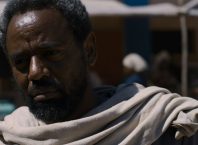
War, faith, trust, memory, and discovery – here’s my take on the three movies I’ve seen that will be screened at the Jerusalem Film Festival, taking place from July 9 – 19, 2026.
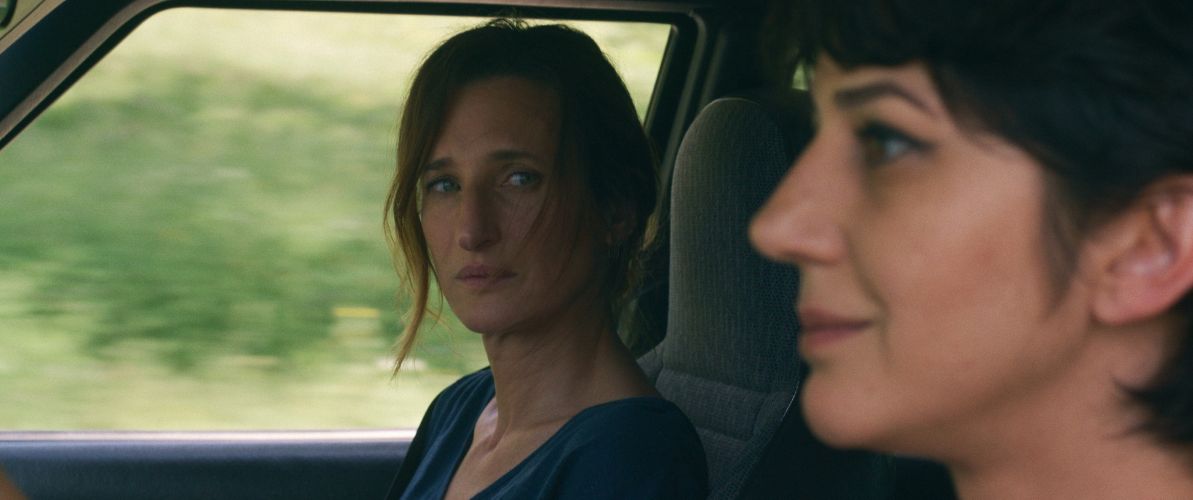
In the Land of Arto
In the Land of Arto, written and directed by Tamara Stepanyan in her fiction feature debut, looks at Armenia from the perspective of an outsider. Recently widowed, Céline travels to Armenia to obtain her late husband Arto’s birth certificate. Although she and Arto met, married, and raised a family in France, she wishes to enable their two children to acquire Armenian citizenship, as something symbolic, a connection to her husband, their father. However, when she arrives in Gyumri, Arto’s hometown, she is shocked to discover that there were dark secrets in Arto’s past.
The viewer sees Gyumri and Armenia through Céline’s eyes, who, although she does not know the language or much of the history, is curious, kind, and open to experience. On the train to Gyumri she watches two sisters dancing the macarena, and a women traveling with her chickens. When the train breaks down short of the station, she gamely carries her luggage, and along with the other passengers, walks the rest of the way. But she is also determined. When the clerk at the archives tells her that there is no one named Arto Saryan in their records, Céline persists, even though the woman tells her that all men are liars.
With the help of a French-speaking taxi driver (Aleksandr Khachatryan) she seeks out more information about Arto and the life he hid from her. Along the way, she – and the viewer – see the wreckage left by the 1988 earthquake, the once impressive Iron Fountain built in the Soviet Era, now a rusted relic. There is a deliberate slow pace, as every question of Céline is translated to Armenian, and each response is translated into French. The spaces between words and comprehension privileges feeling, as Arto’s former friends and brothers in arms convey their resentment and anger, while Céline struggles with the knowledge of all her husband hid from her.
Camille Cottin brings depth and resonance to her role as Céline, who does not break after learning the truth, and seeks to learn more to better understand Arto and his country. She meets Arsiné (Zar Amir), a tour guide, and the two embark on a dangerous journey that will take them into Arto’s dark past as it illuminates Armenia’s troubled past and harsh present and will test their trust in one another.
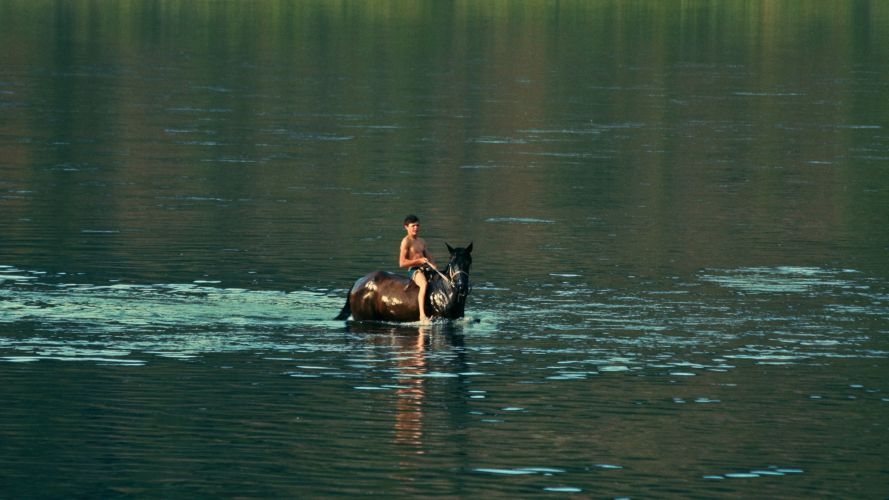
Silent Flood
Silent Flood, directed by Dmytro Sukholytkyy-Sobchuk, takes the viewer to the Dniester River in the Ukraine, where a religious group who call themselves “the saved ones” live in villages along its shores. They live according to the tenets of the Bible and shun modern technology: using horses and hand tools for farming, and shunning electricity, cars, and other devices. Sukholytkyy-Sobchuk takes the viewer into this world from a distance, gradually coming in closer. The film begins with the sound of water, and a heavy mist in which objects can barely be discerned. The film won the award for Best Cinematography at IDFA 2025, and its visuals are breath-taking, creating the sense of a place, its people, and the beauty, power, and wonder of nature.
The voices of community members and others who were interviewed are heard over images; in the film’s opening chapter these images are of the river and people gathering to board the ferry. This idyllic river is a source of recurring floods, and this green valley has known many wars, including the current ongoing war with Russia. The community members are Pacifists, they live apart, not voting in elections and not serving in the army. In the second part, titled “The Shores of Eden” the perspective comes closer, with images of the community’s daily life – a boy riding a horse in the river, a group of children singing “build your house on Jesus”. Yet the dialogue that is heard is that of people outside the community describing them – and not without some resentment over their self-exclusion from the war. Yet they do not keep themselves entirely apart, as one sees in the film, nor can they, which also becomes apparent.
Sukholytkyy-Sobchuk had incredible access to the community – especially considering their beliefs in the corrupting power of technology. He made use of this access to depict a unique way of life, situated between floods and war, grounded in belief, in daily work, in baking and sharing of bread.
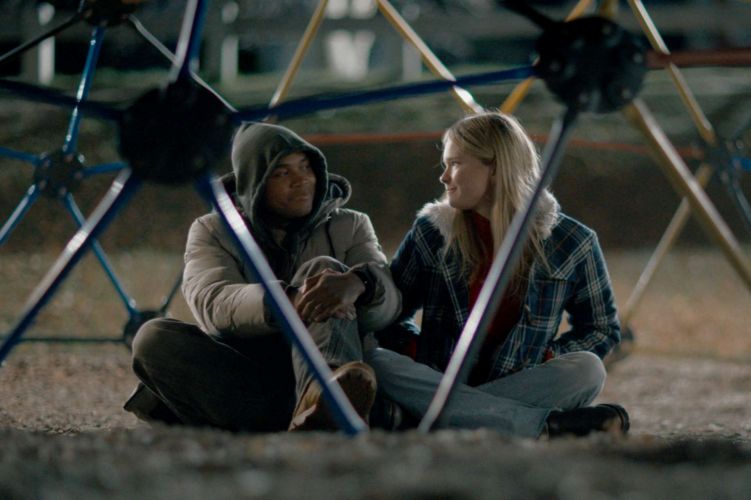
Their Town
In Their Town, Abby and Tyler fulfill all the requirements of a high school “it” couple: he’s an athlete, she’s beautiful, and they are playing the romantic leads in the school play. But in the film’s first moments, Tyler (Will Parker) tells her he’s quitting the play. Abby (Ora Duplass) isn’t happy about it, but to their drama teacher’s great relief, stays in the play, because “I’m my own person.” What that might mean is one of the themes explored in this film that takes a close look at the ordinary (with a nod to Thornton Wilder’s Our Town) to discover the wonder in it.
Their Town is a family project: directed by Katie Aselton with a screenplay by her husband Mark Duplass and starring their daughter Ora Duplass. A reluctant Matt (Chosen Jacobs) is given Tyler’s part in the play and seeing that he’s very nervous, Abby offers to help. Between memorizing lines, the two get to know one another, as afternoon turns into evening, and evening turns into night. The film is at its best in the small moments and fine details, against the backdrop of Bangor, Maine.
The full program and tickets are available on the Jerusalem Film Festival website.