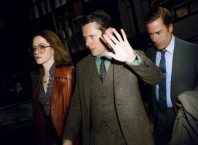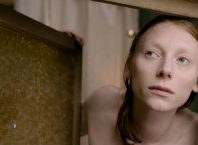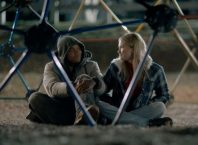
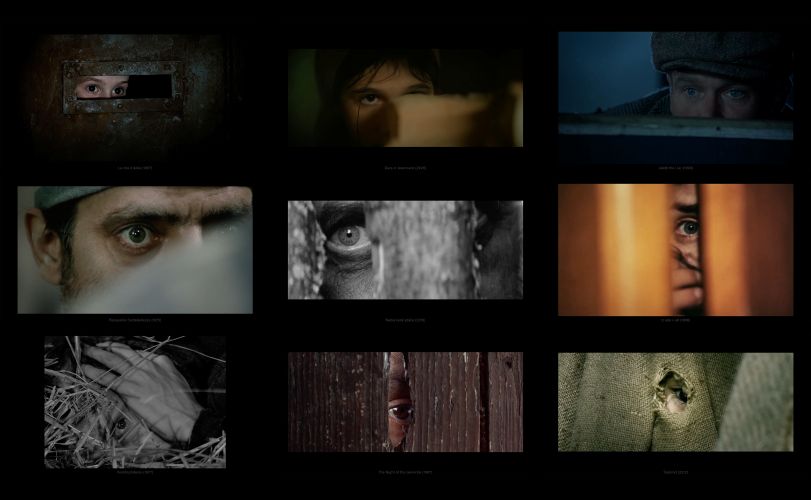
Holofiction, directed by Michal Kosakowski, is a unique presence in a documentary film festival – it is entirely composed of excerpts from fictional films and television series. An experimental film with no dialogue, it is a montage drawn from an archive of 3,000 feature films, an examination of these recurring images of the Holocaust and WWII that have become iconic, part of our collective cultural memory, our representation and understanding of the Holocaust. An extraordinary feat of extensive and meticulous research, curation, and editing, Holofiction invites the viewer to reflect on and question the visual representation of the Holocaust, whether it is even possible or ethical, the shaping of historical perception, and the preservation of memory – with a focus on filmmakers, their power and responsibility.
The film opens with a quote from Claude Lanzmann (1925–2018): “Fiction is a transgression. It is my belief that the depiction of certain things is prohibited.” It is a question, and a challenge, for what will follow are 102 minutes of footage from films that, according to Lanzmann, should not have been made because it is the “certain absolute horror” of the Holocaust. And yet, with the passage of time, the question remains – how does one convey the significance of the Holocaust to younger generations?
In its montage of recurring images, it is perhaps surprising to realize that a vast number of feature films with diverse individual stories, styles, and characters, made over several decades, have so many common motifs. Kosakowski’s film has its own rhythm, augmented by Paolo Marzocchi’s score, it is like a wide-angle view of history. One does not follow a particular narrative thread or protagonist, but rather, a series of successive images create a cumulative effect. A significant aspect of the film is that this layering of images emphasizes the systemic aspect of Nazism and the atrocities committed in the Holocaust. Yet Kosakowski does not bombard the viewer with images of horror, rather, he employs cinematic solutions to convey the violence with restraint and respect for its victims. For example, certain scenes are shown upside down, replacing the potential exploitative aspect of viewing a victim of violence with a pervasive sense of wrongdoing, a world literally upside-down.
Each excerpt is shown with the film title and date, and the log roll at the end of the film lists all the excerpts included. Many will recognize the more recent and famous films such as Steven Spielberg’s Schindler’s List (1993) and Quentin Tarantino’s Inglourious Basterds (2009), as well as actors such as Liza Minelli and Joel Grey in Bob Fosse’s Cabaret (1972) and Meryl Streep in Alan J. Pakula’s Sophie’s Choice (1982), but these flashes of recognition do not diminish the impact of the film or slow its rhythm. One striking motif that recurs several times is a montage of an actor, such as Donald Sutherland or Christoph Walz, portraying different – and opposing – roles in different films. As the frame shifts back and forth between the two images, it is a deliberate break in the flow of the film, with a jarring exposure of the fiction, reminding the viewers that these are actors portraying a role.
There will be a screening of Holofiction at Docaviv on Sunday, May 31st at 10:00, followed at 11:50 by an event held in collaboration with The Intangible Cinema Project and The Israeli Documentary Filmmakers Forum – The Attack on the Image: The Collapse of Cinematic Space (the event is free with advanced registration). Tickets may be ordered on the Docaviv website.